
What is NADH powder?
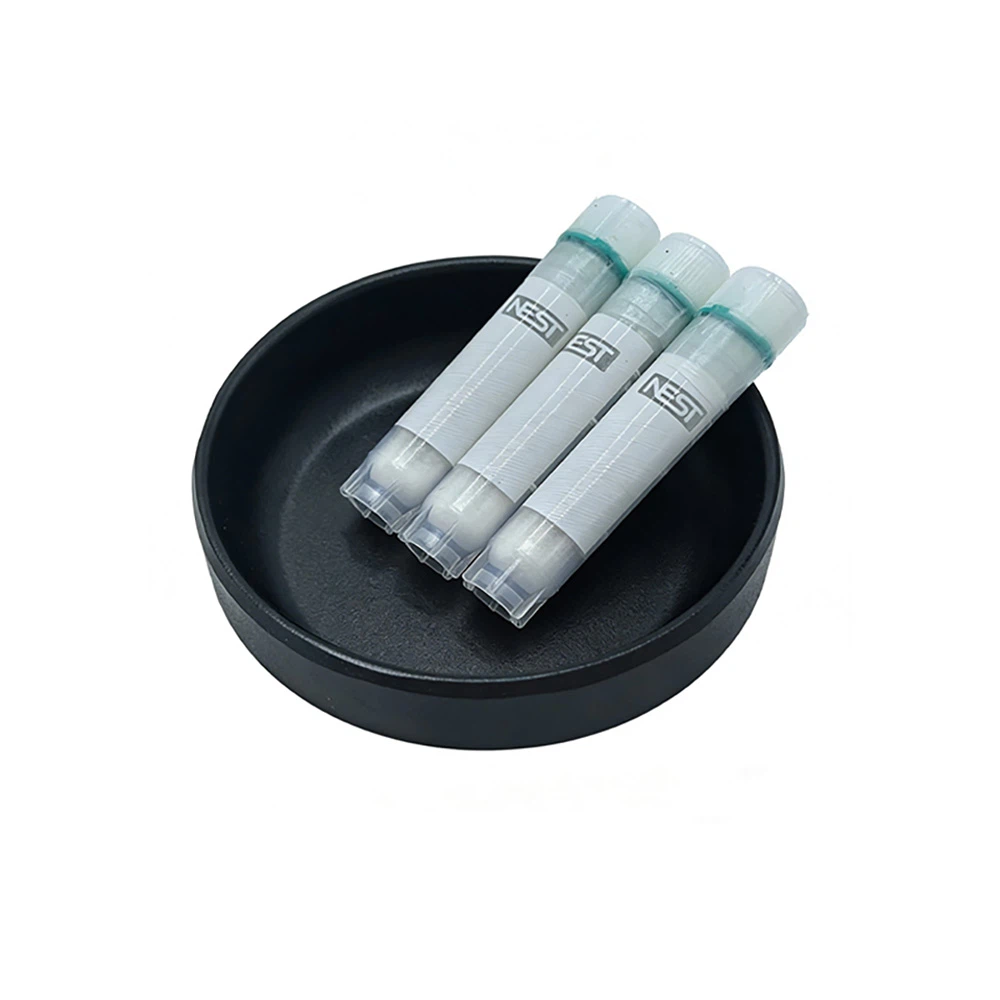
NADH Powder(Nicotinamide Adenine Dinucleotide Hydrogen, also known as reduced nicotinamide adenine dinucleotide or reduced coenzyme I) is an essential coenzyme naturally present in human cells. It is synthesized with the participation of vitamin B3 (niacin or nicotinamide) and is widely distributed across various cell types in the human body, playing a pivotal role particularly in mitochondrial energy metabolism. As the reduced form of NAD⁺, NADH is primarily responsible for receiving, carrying, and transferring high-energy electrons. It channels the energy derived from the breakdown of glucose, fatty acids, and other nutrients into the mitochondrial electron transport chain, thereby promoting the synthesis of adenosine triphosphate (ATP) through oxidative phosphorylation. This process supplies energy for cellular activities, establishing NADH as an indispensable key component of the human energy metabolism system. Beyond its role in cellular energy conversion, NADH is closely associated with normal mitochondrial function, cellular redox balance, energy supply to neurons, muscle activity, and various metabolic regulatory processes. By continuously cycling and interconverting with NAD⁺, it helps maintain normal cellular metabolism in the human body.
What is NAD+ powder?
NAD+ powder is a powder form of oxidised nicotinamide adenine dinucleotide (NAD+). NAD+ plays a crucial role in various biological reactions. Cells require it to convert nutrients into usable energy and maintain normal cellular functions. NAD+ provides the electrons needed by enzymes in metabolism. NAD+ and NADH work together in a continuous cycle to regulate the energy supply of the cell and maintain normal metabolism. NAD+ also helps the cell repair DNA and regulate various signals. Deacetylases (Sirtuins) and Poly(ADP-ribose) polymerase (PARP) are examples of such enzymes. NAD+ has a wide range of roles in the body; therefore, it is involved in producing energy, regulating the stress response, etc
NADH Powder vs NAD+ Powder: Key Differences
NADH powder and NAD+ powder are both forms of the related molecule nicotinamide adenine dinucleotide (NAD), but they are not the same.
|
Comparison |
NAD+ Powder |
NADH Powder |
|
Full English Name |
Nicotinamide Adenine Dinucleotide |
Reduced Nicotinamide Adenine Dinucleotide |
|
Chemical State |
Oxidized form |
Reduced form |
|
Molecular Formula |
C₂₁H₂₇N₇O₁₄P₂ |
C₂₁H₂₉N₇O₁₄P₂ |
|
CAS Number |
53-84-9 |
606-68-8 |
|
Molecular Weight |
663.43 g/mol |
665.44 g/mol |
|
Core Function |
Accepts electrons in redox reactions |
Donates electrons in redox reactions |
|
Primary Metabolic Role |
Involved in glycolysis, the TCA cycle, DNA repair, and Sirtuin-related reactions |
Involved in cellular respiration and mitochondrial electron transport |
|
Role in Cellular Energy Metabolism |
Functions as an electron acceptor |
Functions as an electron donor |
|
Relationship with ATP |
Indirectly supports ATP production through metabolic reactions |
Indirectly supports ATP production through electron transport |
|
Redox Relationship |
Can accept electrons and be converted into NADH |
Can donate electrons and be converted into NAD+ |
|
Primary Research Areas |
NAD+ metabolism, cellular aging, DNA repair, metabolic health |
Energy metabolism, fatigue, neurological function, and cognitive research |
|
Research Focus |
NAD+ levels and associated metabolic pathways |
Reducing capacity and electron transfer |
|
Interchangeability |
Not completely interchangeable with NADH |
Not completely interchangeable with NAD+ |

NADH Powder vs NAD+ Powder: 4 Key Differences
1. 1. Chemical Forms: NAD+ is the oxidized form that accepts electrons, and NADH is the reduced form that donates electrons. The two forms can be converted into one another by reversible redox reactions.
2. Roles in Energy Production: NAD+ is required for electron collection during nutrient catabolism, and NADH transports electrons to the mitochondrial electron transport chain to generate ATP.
3. Cellular functions: NADH is an electron carrier that, along with NAD+, is used by various enzymes for DNA repair, protein regulation and other cellular signalling processes.
How Do NADH and NAD+ Function in Cellular Energy Production?
NADH and NAD+ work together to help the cell produce energy from food. These three are the main steps of glycolysis, the citric acid cycle and oxidative phosphorylation. All stages are involved in electron transport and ATP synthesis at different times.
1.NAD+ Takes Electrons in Glycolysis
Glycolysis is the first step of glucose degradation. It takes place in the cytoplasm, and one glucose molecule is converted into two pyruvate molecules.
At this time, NAD+ is reduced by an intermediate molecule to provide a hydrogen atom. Therefore, NAD+ is reduced to NADH; this is because NAD+ serves as an electron carrier. NADH has been generated during the breakdown of glucose and will be used by later stages of cellular respiration to produce ATP. Provide energy for the cells from outside.

2. The Citric Acid Cycle produces more NADH.
Glycolysis produces pyruvate; under aerobic conditions, it is transported to the mitochondrion. Cells produce acetyl-CoA from pyruvate and then, in the course of the citric acid cycle, a number of enzymes break down this acetyl-CoA.
NAD+ is reduced by several of these reactions to form NADH. Each acetyl-CoA molecule generates three NADH molecules via the cycle, and this way of obtaining energy from nutrients can be utilised by the cell later. NADH then carries these high-energy electrons to the mitochondrial electron transport chain.
3. NADH Supplies Electrons to the Electron Transport Chain
The Electron Transport Chain is in the inner membrane of mitochondria. Some protein complexes are present to carry out electron transfer and build a proton gradient; NADH provides electrons at Complex I. Complexes I, III and IV in the electron transport chain pump protons across the inner mitochondrial membrane during electron transport; thus, an electrochemical gradient is established to power ATP synthesis.
At the end of the chain, oxygen is reduced and combines with protons to form water. At the same time, NADH is oxidized to NAD+, and this NAD+ can then be used by other metabolic pathways.

4. ATP synthase produces ATP
The proton gradient generated by the electron transport chain provides the energy for ATP synthesis; thus, protons flow back into the mitochondrial matrix through ATP synthase. This motion is used to turn the enzyme and drive the production of ATP from ADP and inorganic phosphate; ATP provides the main energy for cell life. Many essential functions of the body can be carried out by it.
Based on the above general biochemical estimations, one mole of NADH can be converted into about 2.5 ATP by oxidative phosphorylation.
Therefore, both NADH and NAD+ are required by the cell's energy-producing pathways. NAD+ is reduced by nutrient catabolism, and NADH is then employed in the electron transport chain. Together, they help to maintain the energy-producing function.
Need help finding NADH powder or NAD+ powder?
Contact our team at zora@tnjone.com to discuss the ingredient requirements of your company, request product specifications, and explore raw material solutions for your business.
References
1. Migaud, M. E., Ziegler, M., & Baur, J. A. (2024). Regulation of and challenges in targeting NAD+ metabolism. Nature Reviews Molecular Cell Biology, 25, 822–840.
2. Covarrubias, A. J., Perrone, R., Grozio, A., & Verdin, E. (2021). NAD+ metabolism and its roles in cellular processes during ageing. Nature Reviews Molecular Cell Biology, 22, 119–141.
3. Cantó, C., Menzies, K. J., & Auwerx, J. (2015). NAD+ Metabolism and the Control of Energy Homeostasis: A Balancing Act between Mitochondria and the Nucleus. Cell Metabolism, 22(1), 31–53.
4. Li, W., & Sauve, A. A. (2015). NAD+ content and its role in mitochondria. Methods in Molecular Biology, 1241, 39–48.
5. Davila, A., et al. (2018). Nicotinamide adenine dinucleotide is transported into mammalian mitochondria. eLife, 7, e33246.