
Hydroxycitric acid (HCA) is one of the main chemical components that buyers look at when evaluating Garcinia Cambogia Extract Powder. Understanding the structure of HCA and its natural forms will help you to read a product specification with more confidence. It will also help you to ask better questions regarding the HCA content, analytical methods and batch consistency. This article is focused on the chemistry and quality aspects which are important when sourcing a botanical extract.
Chemical Structure and Basic Properties of Hydroxycitric Acid
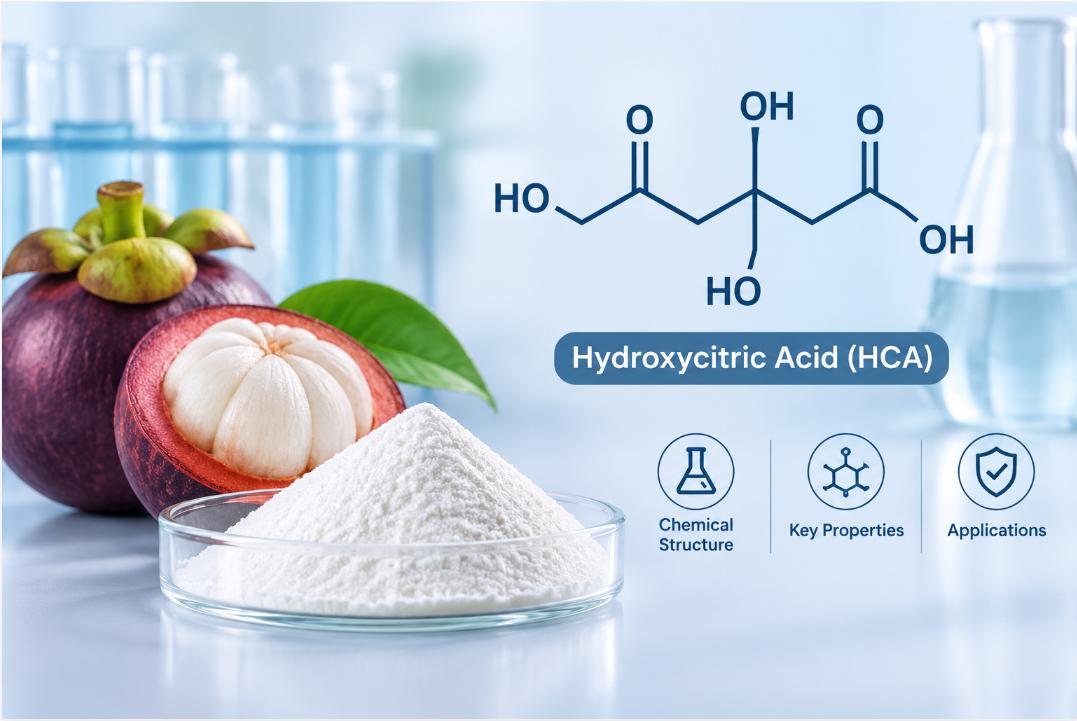
Hydroxycitric acid is an organic acid which is found in several plant sources such as Garcinia cambogia. The molecular formula of hydroxycitric acid is C₆H₈O₈ and the molecular weight is about 208.12 g/mol. There are many carboxyl and hydroxyl groups in the molecule. These functional groups affect the acidity, polarity and behaviour of the molecule in solution.
For buyers the structure is more than a chemistry detail as it helps to explain why the form of HCA matters. A specification may describe free HCA, a hydroxycitrate salt or total HCA expressed on a stated basis and these terms should not be treated as interchangeable.
Solubility, Appearance and basic physical properties of HCA
Pure HCA and its salts may behave differently in water. The degree of ionisation, pH, temperature and the presence of counter ions all affect the apparent solubility. A salt form may be more soluble under certain conditions than the free acid. However the actual performance will depend on the material and the test method.
Commercial botanical extracts are generally supplied as powders. The colour, flow, moisture content and dispersibility of these products may vary with the plant material and the manufacturing process. Such physical observations do not confirm the HCA content. A visual check cannot be substituted for a suitable identity and assay test.
Key chemical properties and stability of hydroxycitric acid
HCA has several acidic groups and can exist in different chemical forms. Under certain conditions it may undergo changes such as lactone formation. The processing conditions, pH, moisture and storage conditions can affect the chemical profile of HCA. That is why manufacturers should define suitable process controls and storage conditions for each product.
When comparing suppliers, find out whether the HCA result given is for free acid, a salt or total HCA which has been calculated using a defined conversion basis. Also check the analytical method and sample preparation. A number without a clear basis can lead to misleading comparisons.
Natural forms of HCA in Garcinia Cambogia fruit
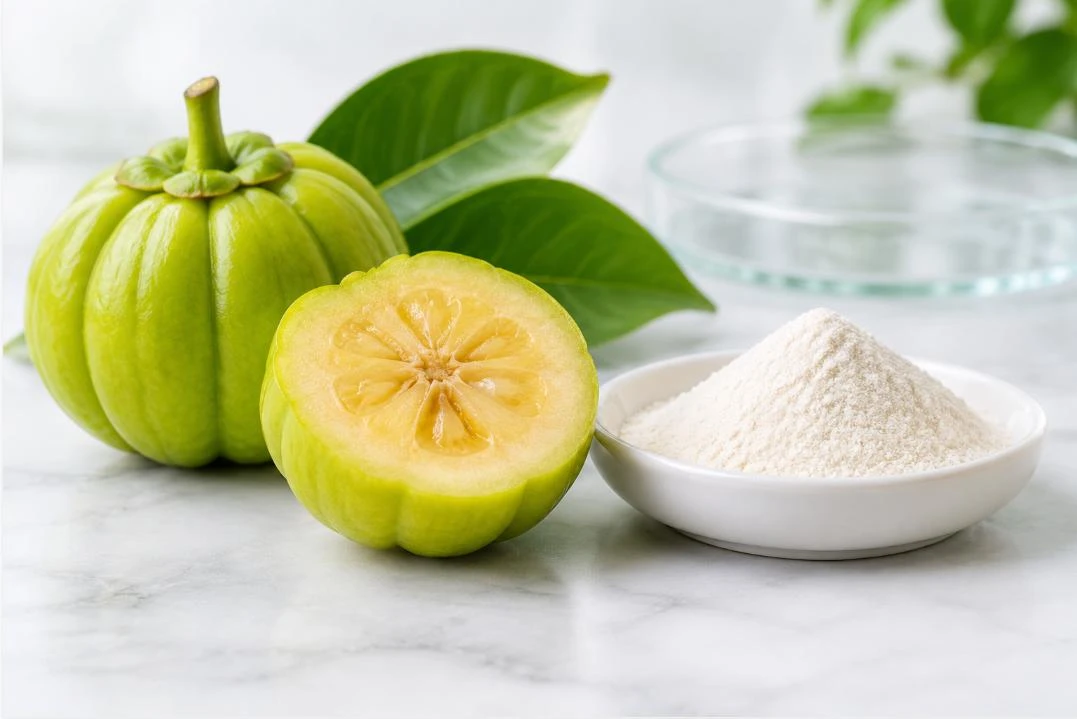
Garcinia cambogia is a tropical fruit bearing plant. HCA occurs naturally in the fruit especially in the rind. The amount of HCA present can vary according to the plant source, growing conditions, harvest maturity and post-harvest handling. Extract manufacturers use processing steps in order to obtain a concentrated ingredient from the botanical material.
Natural variation is one of the reasons why buyers should not assume that all Garcinia extracts have the same composition. A product name does not define the HCA level, chemical form or quality of the product. The product specification and batch documentation give the information required for a proper review of the product.
Natural occurrence of HCA in Garcinia Cambogia
The fruit rind is the commonly used botanical material for HCA-rich extracts. Researchers have studied HCA in conjunction with related compounds such as HCA lactone. The relative amounts of these compounds may change with the quality of the raw material and the extraction conditions. This makes botanical identification and process control an important part of ingredient quality management.
A responsible supplier should be able to explain the declared plant part and give traceable batch information. Buyers may also ask for information regarding botanical identification, raw material controls and the method used to determine the HCA content.
Differences between free HCA and hydroxycitrate salts
Free HCA is the acid form of the molecule. Hydroxycitrate salts are the HCA in an ionised form which is paired with positively charged ions. Examples of these which are commonly discussed in the ingredient specifications are calcium and potassium hydroxycitrate. The counterion changes the composition of the material and can also affect the physical properties of the material.
This is important when you are comparing products. The total mass of a salt includes the counterion and an HCA-equivalent value is the amount on a different basis. Make sure that you check how the supplier reports the assay. Make sure that you check whether the percentage is for the salt itself, HCA equivalent or some other defined calculation.
The role of HCA as a key component in Garcinia cambogia extract powder
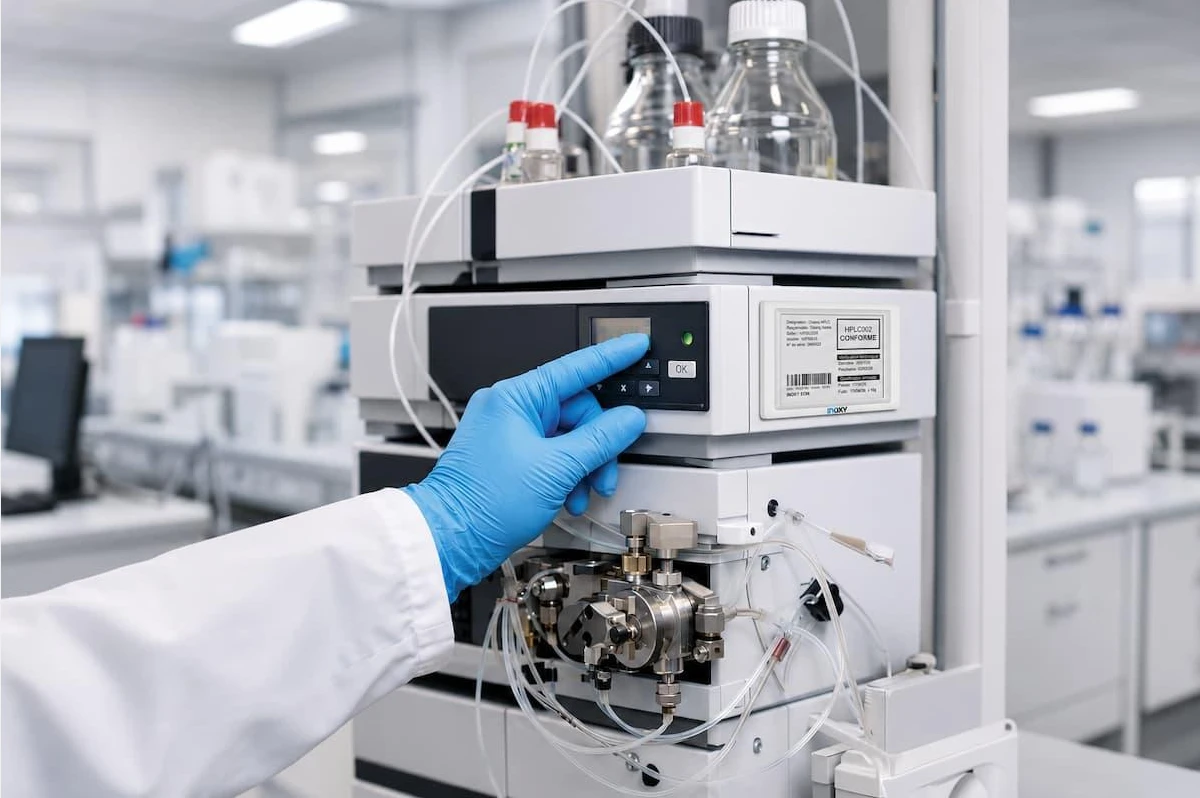
HCA is a key marker which is used to describe and standardise many Garcinia cambogia extracts. A declared HCA percentage gives the buyer one useful measure for comparison of the products. It does not however describe every aspect of extract quality. The botanical identity, moisture, residual solvents, contaminants and other relevant quality attributes may also need to be reviewed.
When looking at Garcinia Cambogia Extract Powder look at the whole specification and not just a single headline percentage. Ask for a batch specific Certificate of Analysis (COA). Look at the test method, result units, acceptance criteria and whether the laboratory used a validated or otherwise appropriate qualified procedure.
Relationship between HCA content and Garcinia cambogia extract specifications
HCA content is often a central line in a Garcinia extract specification. However two products which have similar declared HCA levels may differ in terms of moisture, particle characteristics, residual solvents or other quality attributes. Buyers should compare the specifications line by line and confirm that the test basis is the same.
A practical supplier review may include the following points:
Botanical name and the plant part used.
The declared HCA content and whether this is reported as free acid, salt or HCA equivalent.
Analytical method, reference standard and calculation basis.
Batch specific COA and any third party test reports.
Moisture, residual solvents, elemental impurities and microbiological limits where relevant.
Packaging, storage conditions, shelf-life support and batch traceability.
Do not take it for granted that a general company quality statement means that a particular product or batch meets a particular pharmacopoeial standard. Ask for the relevant product documents and check the scope of any claimed certification or testing.
FAQ
Q1:What does HCA mean in Garcinia cambogia extract?
HCA is short for hydroxycitric acid. It is a naturally occurring organic acid which is found in the Garcinia cambogia fruit and is commonly used as a marker in extract specifications.
Q2:Is free HCA the same as calcium or potassium hydroxycitrate?
No. Free HCA is the acid form and hydroxycitrate salts have a counterion. They have different molecular compositions and different mass bases.
Q3:Does a higher HCA percentage always mean a better extract?
Not by itself. The HCA content is important but the buyer should also look at the identity, analytical methods, contaminants, moisture and batch documentation.
Q4:How do buyers check the HCA content?
Review a batch specific COA and check the analytical method, reference standard, calculation basis and reported units. Independent testing can provide further assurance.
Q5:What documents should buyers ask for from the supplier?
Ask for the product specification, batch COA, relevant analytical reports, safety data sheet and any traceability or quality system documents available.
Working with TNJONE
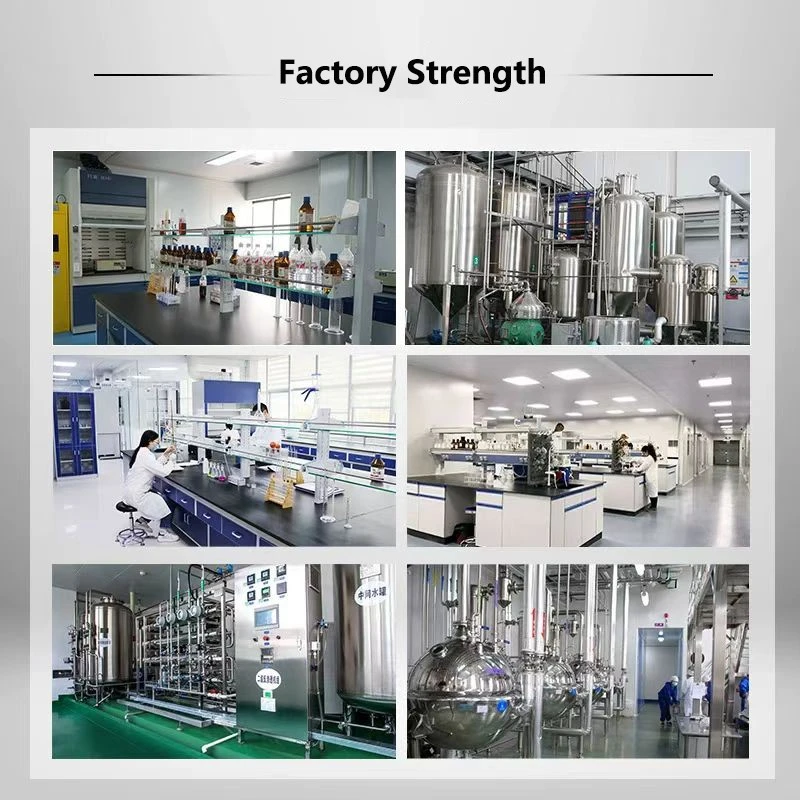
TNJONE has more than ten years' experience in the field of pharmaceutical raw materials and its activities cover research, production and sales. The company says that it operates a GMP-compliant factory in Huyi District, Shaanxi Province and also offers QA/QC supervision, OEM/ODM services and support for third-party testing. The company's equipment comprises analytical, concentration, purification, freeze-drying and synthesis systems.
For Garcinia Cambogia Extract Powder the buyer should check with the supplier as to which grade is available, the HCA form, the target assay, the test method and the batch specific documentation. Company level quality information should not be used in place of a review of the exact product specification and COA.
For product information or a quotation please contact TNJONE at sales@tnjone.com
References
Lewis YS, Neelakantan S. (-)-Hydroxycitric acid - the principal acid in the fruits of Garcinia cambogia. Phytochemistry. 1965;4(4):619-625.
Jena BS, Jayaprakasha GK, Singh RP, Sakariah KK. Chemistry and biochemistry of (-)-hydroxycitric acid from Garcinia. Journal of Agricultural and Food Chemistry, 2002;50(1):10-22.
Jayaprakasha GK, Sakariah KK. Determination of organic acids in the leaves and fruits of Garcinia indica (Desr.) by LC. Journal of Pharmaceutical and Biomedical Analysis. 2002;28(2):379-384.
Yamada T, Hida H, Yamada Y. Chemistry, physiological properties and microbial production of hydroxycitric acid. Appl Microbiol Biotechnol. 2007;75:977-982.
Semwal RB, et al. Garcinia cambogia: a review of its phytochemistry and pharmacology. Phytotherapy Research. 2015;29(8):1157-1169.
U.S. Pharmacopeial Convention. Garcinia cambogia Extract. United States Pharmacopeia - National Formulary. Consult the current edition of the official monograph for applicable monograph details.